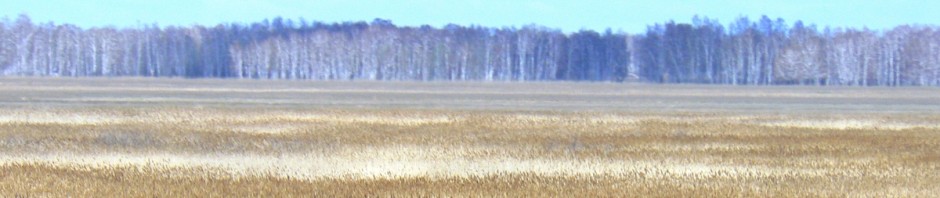
This long rail segment marks the transition from the Ural Region into the vast interior of Siberia. The journey offers endless forests, remote towns, and the unmistakable feeling of traveling deeper into one of the largest regions on Earth.
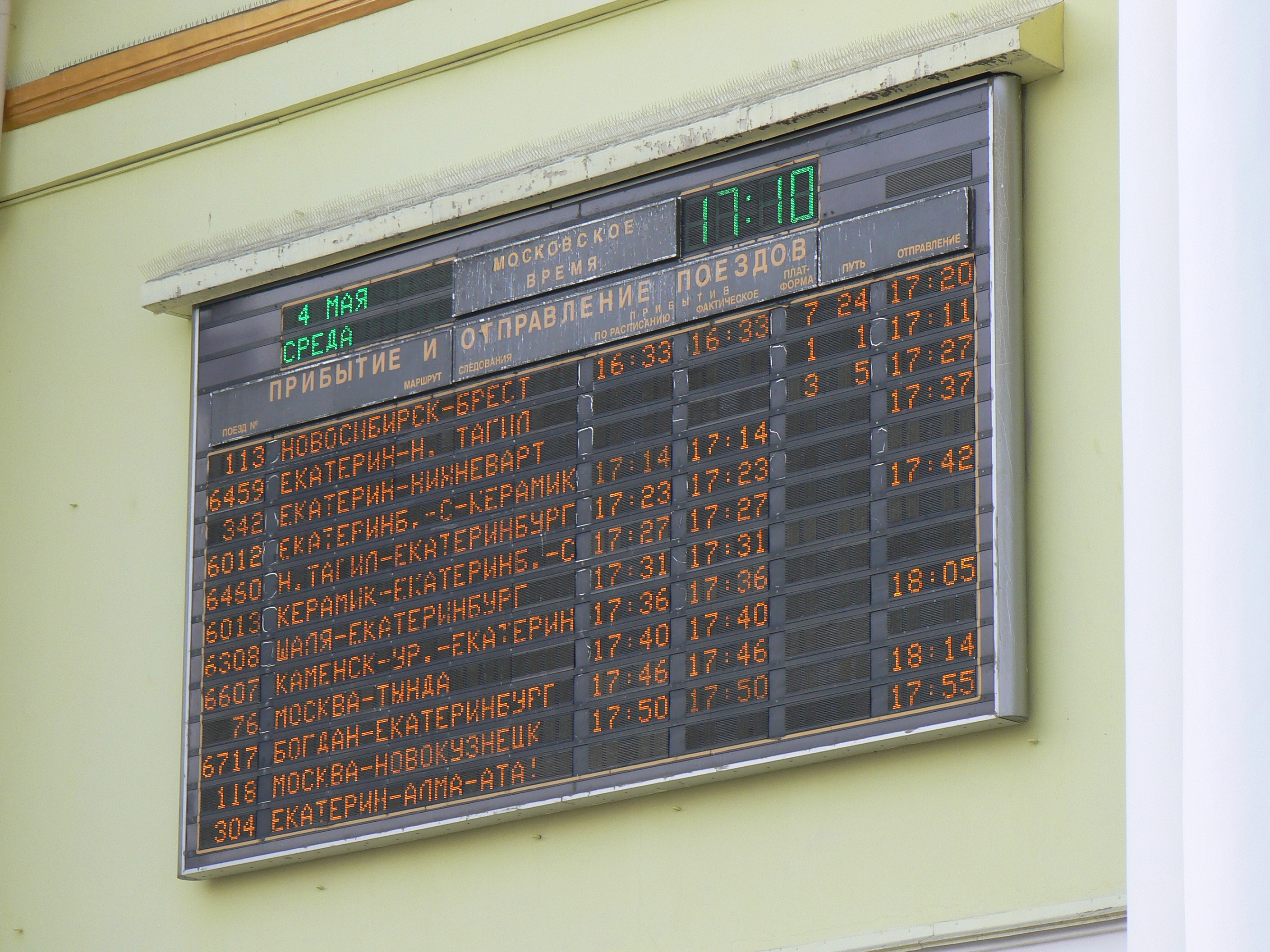
At the Yekaterinburg railway station on the marquee, train number 076 is now displayed. We are going from Yekaterinburg to Novosibirsk, but the marquee shows Москва(Moscow) as the origin and Тында(Tynda) as the destination.
Around 1745, we walk to Platform 1 and go through the usual boarding routine.
This time we have a large Russian lady as the Provodnitsa, and she is friendly and efficient. We find our 2nd class compartment and so far it is just the 2 of us, but that will soon change. This will be a 21-hour ride, with no food service and no dining car, $188 each. However, earlier we did pick up some sandwiches to go just outside the station. There will also be food vendors at stops enroute.
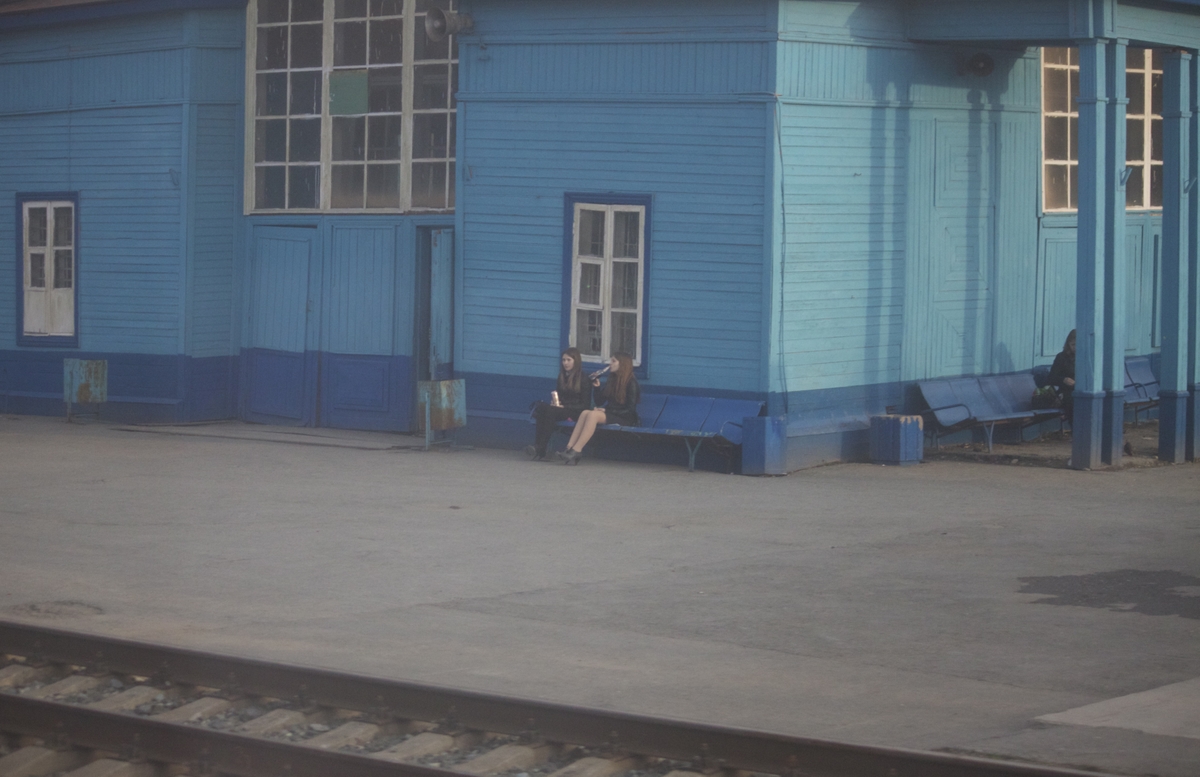
As we leave Yekaterinburg, we pass through some very flat plains, birch and pine forests, small villages but no farm buildings. The train usually slows down as it passes through the cities and the stations are especially interesting. But the scenery quickly becomes more remote, with small villages, freight yards, and industrial towns appearing briefly as the train moves steadily toward Siberia.
Around 2100 it is still light out and we pass through a large town with endless rows of high-rise apartments and industry. It is probably Kamyshlov or Pyshma. The train did not have wi-fi and we did not have GPS available on our phone, so we are navigating with a map right now.
At 2300 we decide to get some sleep. In about 2 hours, just before Tyumen, we will pass Kilometer 2102 and officially enter Siberia!
Thursday May 5
We sleep well until the train stops at the city of Tyumen. We are officially in Siberia, but I’m too tired to think about it right now. Tyumen had a large prison in the 1800’s and was a forwarding area for exiles being sent to Eastern Siberia. The prisons have been gone since Stalin’s death, and the area is now oil rich.
Drama on the Trans-Siberian
At 0130, our compartment door is opened by the Provodnitsa, and a loud emotional discussion takes place in our doorway for about 10 minutes. It starts with a gasp from a young Russian girl who apparently sees Jeff and I sleeping in 2 of the 4 bunks. Soon after a baby starts crying and the young mother does her best to comfort the child. Meanwhile her husband starts talking to the Provodnitsa and tries to comfort his wife and child. The conversation is entirely in Russian of course and I do not understand the conversation but it sounded something like this:
Young Mother: Gasp!…what the hell is this, there are 2 men in this compartment!
Provodnitsa: It’s no problem, they are Americans and will not bother you. See they are sleeping.
Young Mother: Americans, in Russia, you’ve got to be kidding me. I want a different compartment! I don’t feel safe here.
Husband: Look they are asleep and the old one was snoring. The younger one has an Apple computer and is probably a harmless computer nerd. We will only be on the train for 5 hours. Deal with it!
Provodnitsa: The train is full, and you have no choice. See we have already left Tyumen. What do you expect? The 3 of you will need to sleep in the 2 bunks. Have a good trip….dasvadonya!
Young Mother: Talks fast Russian non-stop for several minutes to husband who sighs and appears to be mumbling to himself.
Finally, the young couple stops talking, makes their beds with the husband and baby taking the lower bunk across from me with the young mother jumping into the upper bunk. Twenty minutes later, it is quiet and everyone goes to sleep.

It’s about 0200 and I have been pretending to sleep for the last 30 minutes, but now I have one concern. Last night, thinking no one else would board the train, I placed my pants on the upper bunk that the young mother is sleeping on. So how will I get my pants off her bunk in the morning? Should I try to grab them while she is asleep? Probably not. Well, I’m too tired to worry about this now, I’ll deal with it in the morning.
The Young Russian couple sleep all night. The child does wake up a couple times but the father talks to her quietly and she goes back to sleep. Once in a while he snores but I’m sure I do as well. At 0530, light shines through our window, and the train slows down as we arrive at Omsk. The Provodnitsa opens the door and notifies the young family that this is their stop. They quietly pack their things, as they sip on some tea, fold up their bedding and leave.
More Drama
Jeff and I sleep for another hour and then laugh about the strange evening we just had, but then the Provodnitsa enters. This is not the large Provodnitsa that checked us in and talked to the Young Russians at 0130. It is a new one that we have not seen before. She sits down across from us and sternly asks in Russian to see our tickets. We hand them to her and she looks them over very carefully, mumbles a bit, and then shakes her head. She starts talking to us in Russian, looks at the tickets, shakes her head, talks some more, shakes her head, looks very concerned, sighs, throws up her hands, shakes her head again and walks out. We still don’t understand what that was about.
We still have about 10 hours left on this train and are starting to wonder what will happen next. We make our way to the Samovar, fill up our stakans and throw in a tea bag. We have Ramen for breakfast and watch the countryside go by. The terrain has become flatter now with some swampy areas mixed in with grasslands, pines and birch. Cattle can be seen grazing on the grasslands, but no farms can be seen, and still no fences.
Tatarskaya
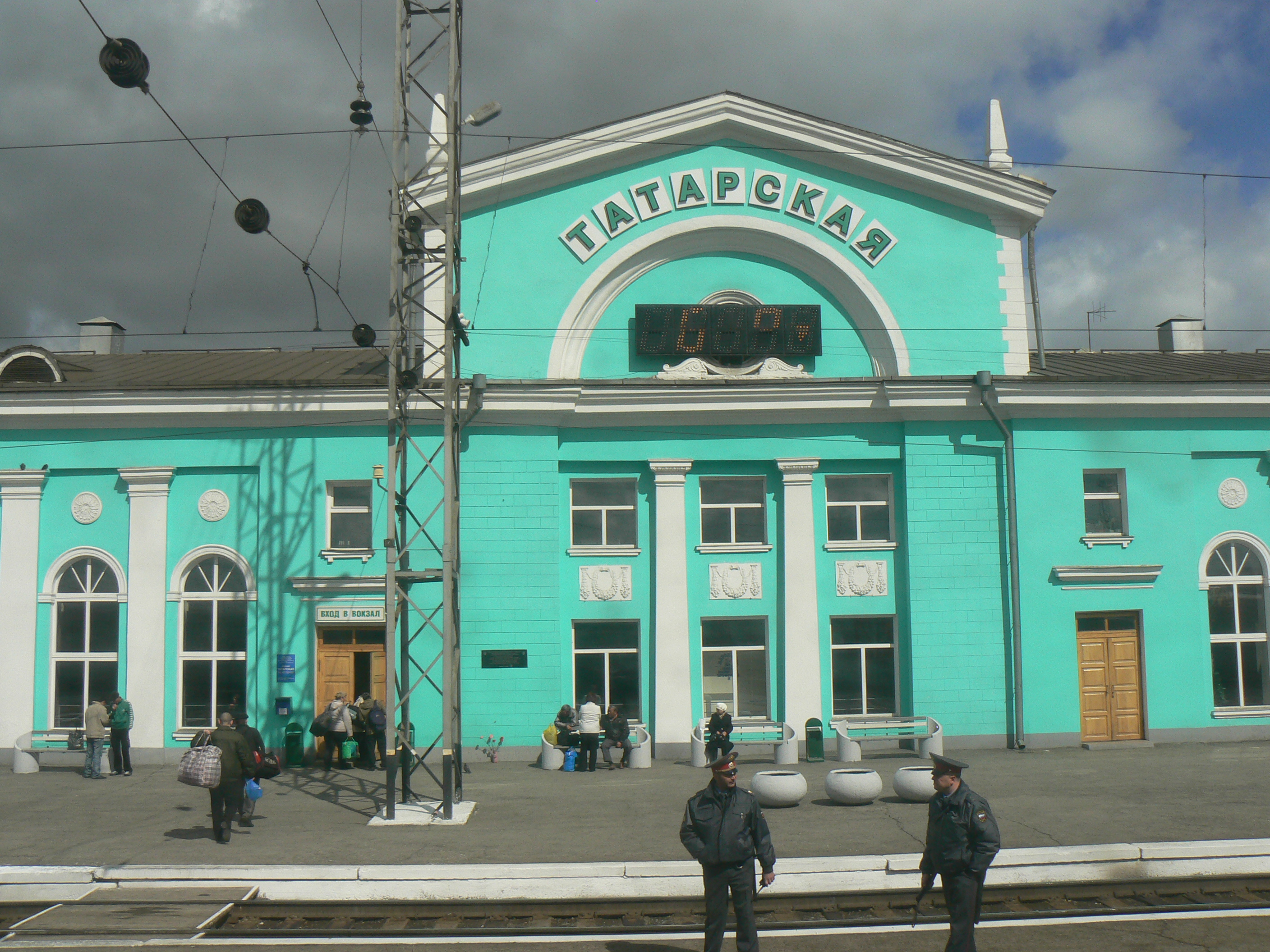
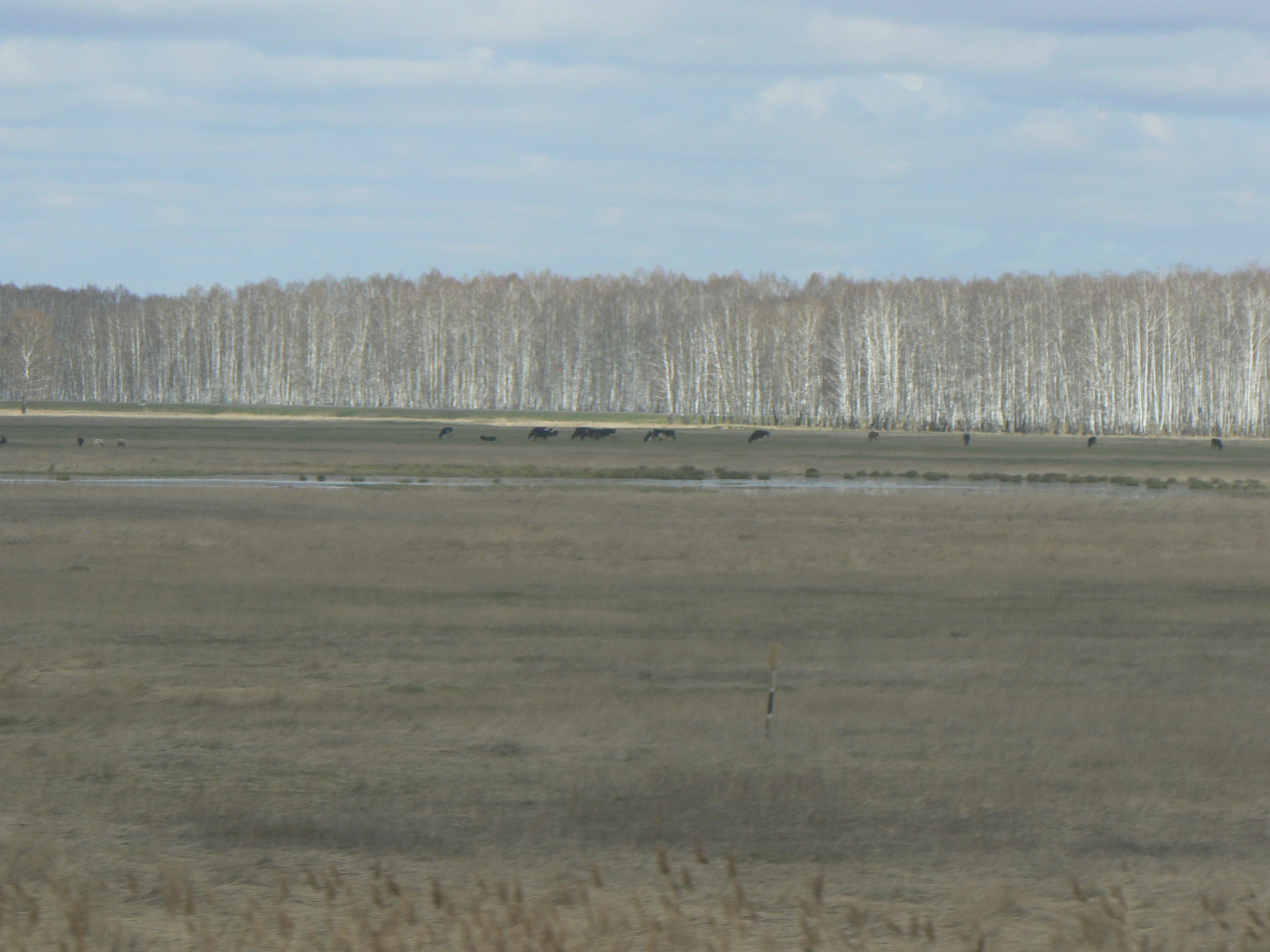
About 200Km past Omsk we stop at the city of Tatarskaya(aka Tatarsk). It has a beautiful train station in the standard pastel green color that is common in Russia. A few people depart and within 2 minutes we are off again.

Jeff starts a video and we pass several small Siberian houses with colorful shutters and trim.
This part of town by the train station has maybe 300 homes with small muddy streets and appears to be in the middle of a swamp. A minute later, we are back in the desolate, but beautiful Siberian countryside.
Some Siberian History
When someone mentions Siberia, usually a couple thoughts come to mind:
- Cold
- Isolation
- Exiles and Prisons
The latter is explained very well in a book called Siberia and the Exile System written by George Kennan in 1891. While much of the prison system in Siberia was made up of hardened convicts, a good portion of it was made up of people with political beliefs that were not acceptable to the Tsar, and ordinary people who committed misdemeanors. Examples he gives are fortune telling, prize fighting, chewing snuff, or in general anything that was considered obnoxious at the time. Others were exiled simply for having banned books in their homes. People were often exiled without a trial and often for several years. At one point, in the late 1800’s, the government tried to improve the efficiency of the Exile system by asking the police and local authorities to try to anticipate which people in their villages might eventually break the law. Soon after people were immediately exiled wherever the police felt that they would eventually break the law.
The Siberian Steppes
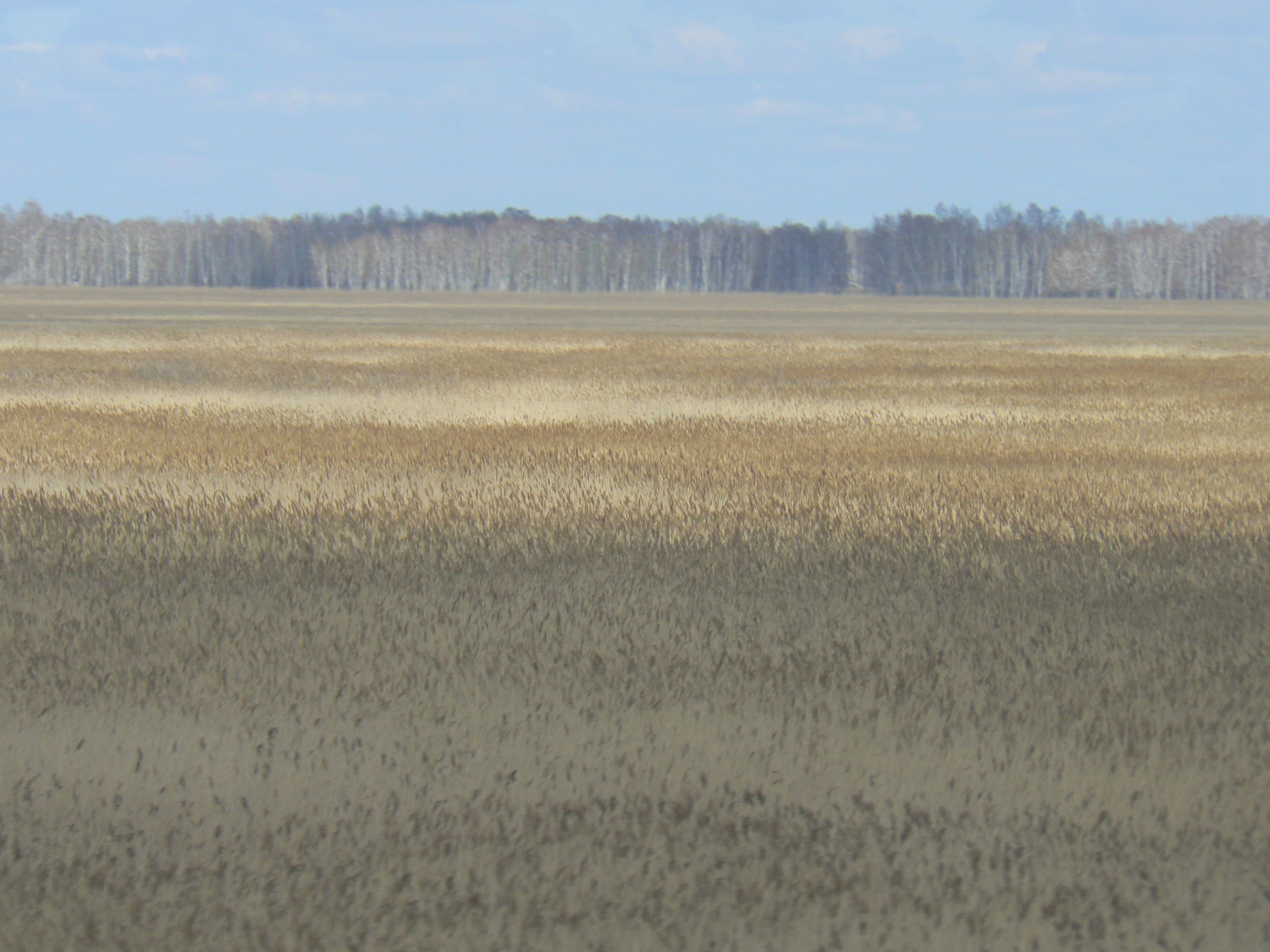
For the next 10 hours or so we will be travelling through an area of Siberia known as the Baraba Steppe. Steppes are basically endless grasslands with few trees. Our Trans-Siberian Handbook describes this as a “vast expanse of greenish plains dotted with shallow lakes and ponds where coarse reeds and sedge grass conceal swamps, peat bogs and rare patches of firm ground. From the train it appears that there is a continuous forest in the distance. However, if you walk towards it, you will never get there as what you are seeing is clumps of birch trees and aspen spaced several kilometers apart. The lack of landmarks in this area has claimed hundreds of lives.”
Food Vendors in Barabinsk
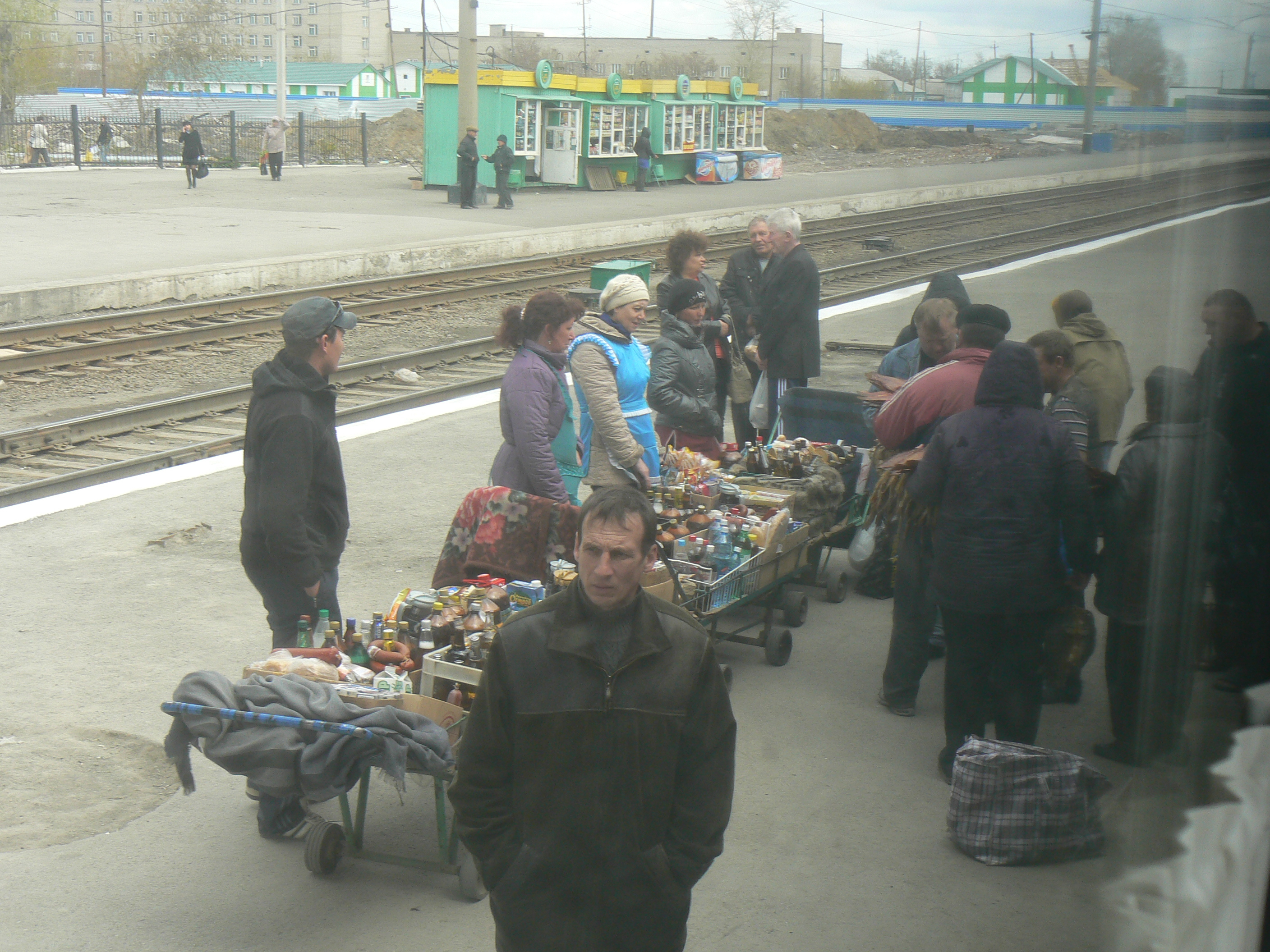
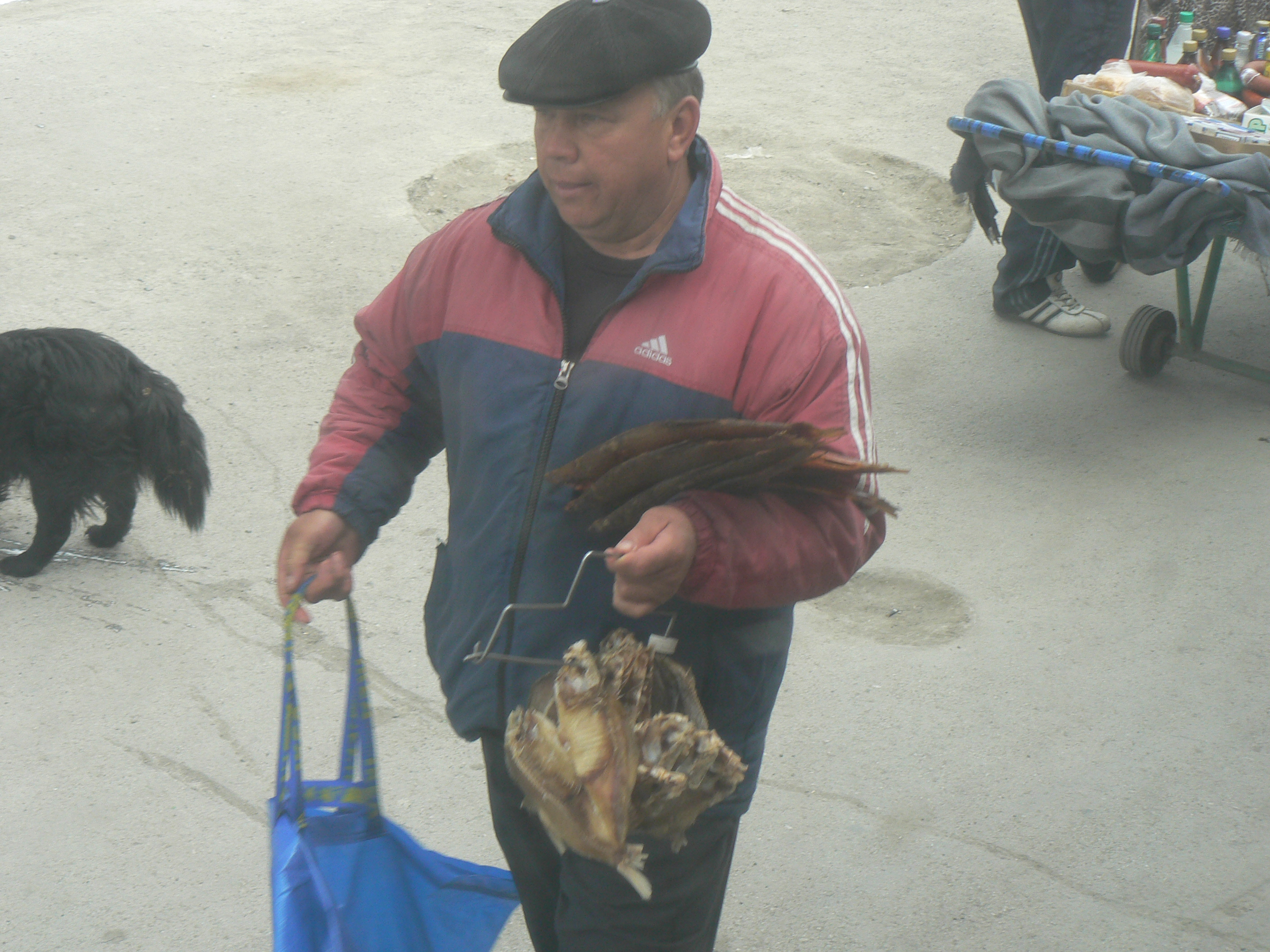
Around 1300 we stop at Barabinsk, a city of some 30,000 for 20 minutes. Outside of the train on the platform are several vendors, mostly selling food. I had read about this before leaving but had not seen a lot of this thus far. It looks cold and gray out there, so I grabbed a jacket and walked out. They are selling Beer and soft drinks, bottled water, dried fish, sausage, ramen, and bread. The locals wear heavy winter jackets. The beer can be bought in 2.5 litre containers and I have noticed some of the people walking around the train with these. I buy a bottle of Zhtsvoe Beer and some mushroom potato chips. The guy next to me also buys beer but spills it and it is quickly drunk up by a large black Russian dog.
The train departs on schedule and again passes through the limitless flat steppe of swamp, grasslands and birch trees. I decide to take a walk and see what others are doing on the train.
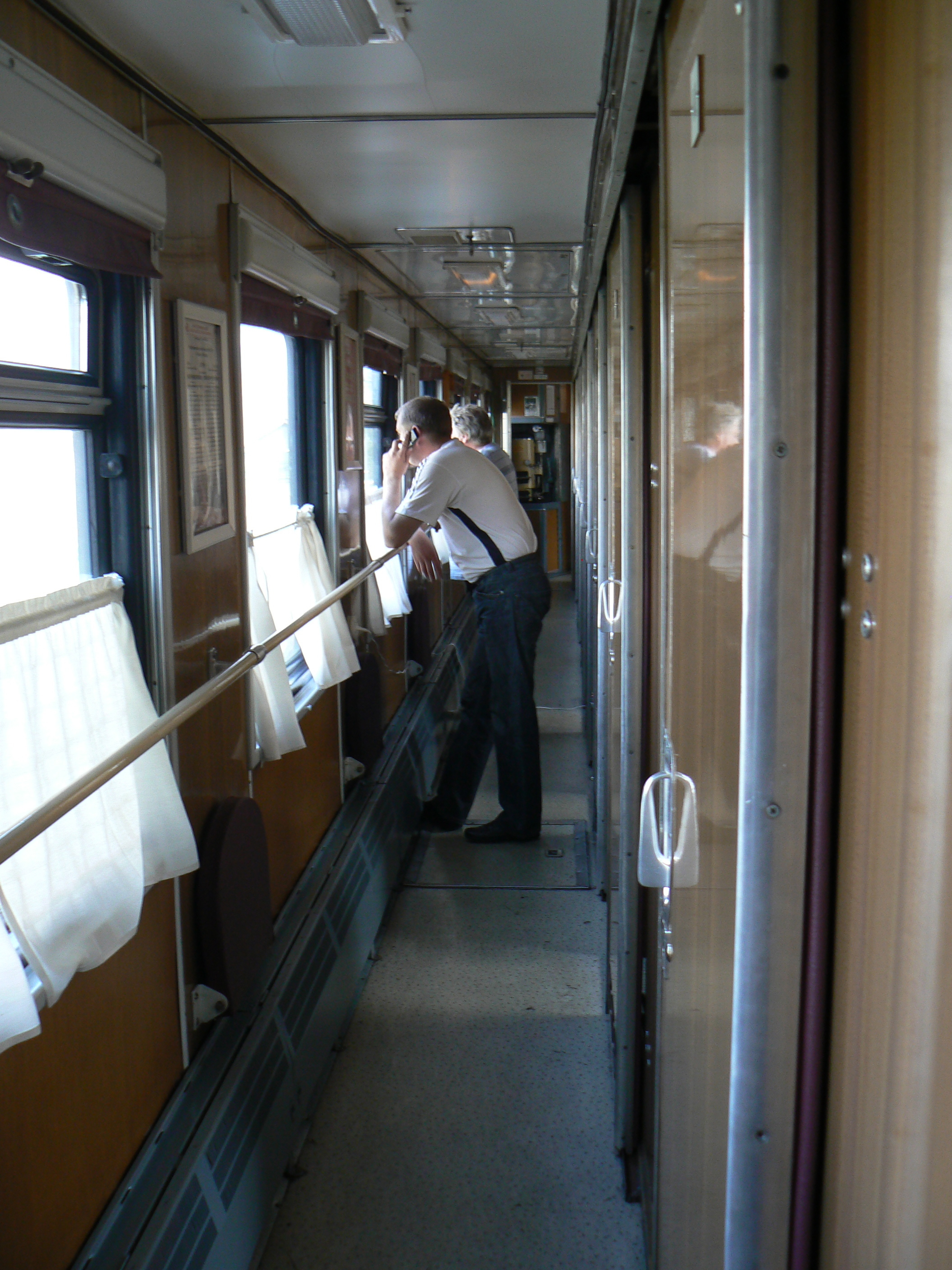
Cell phones are used often on this train. There is no Wi-Fi, but cell phone coverage appears to be good as people are always standing in the hall(corridor) and either using their phone or charging it. There are usually 3 power outlets in each car, in the corridors and they are continually in use. Now an older guy walks past and smells like he has not showered for weeks. To my surprise, I have yet to see an American or European tourist on the Trans-Siberian. So far, our trains seem to be 100% Russian.
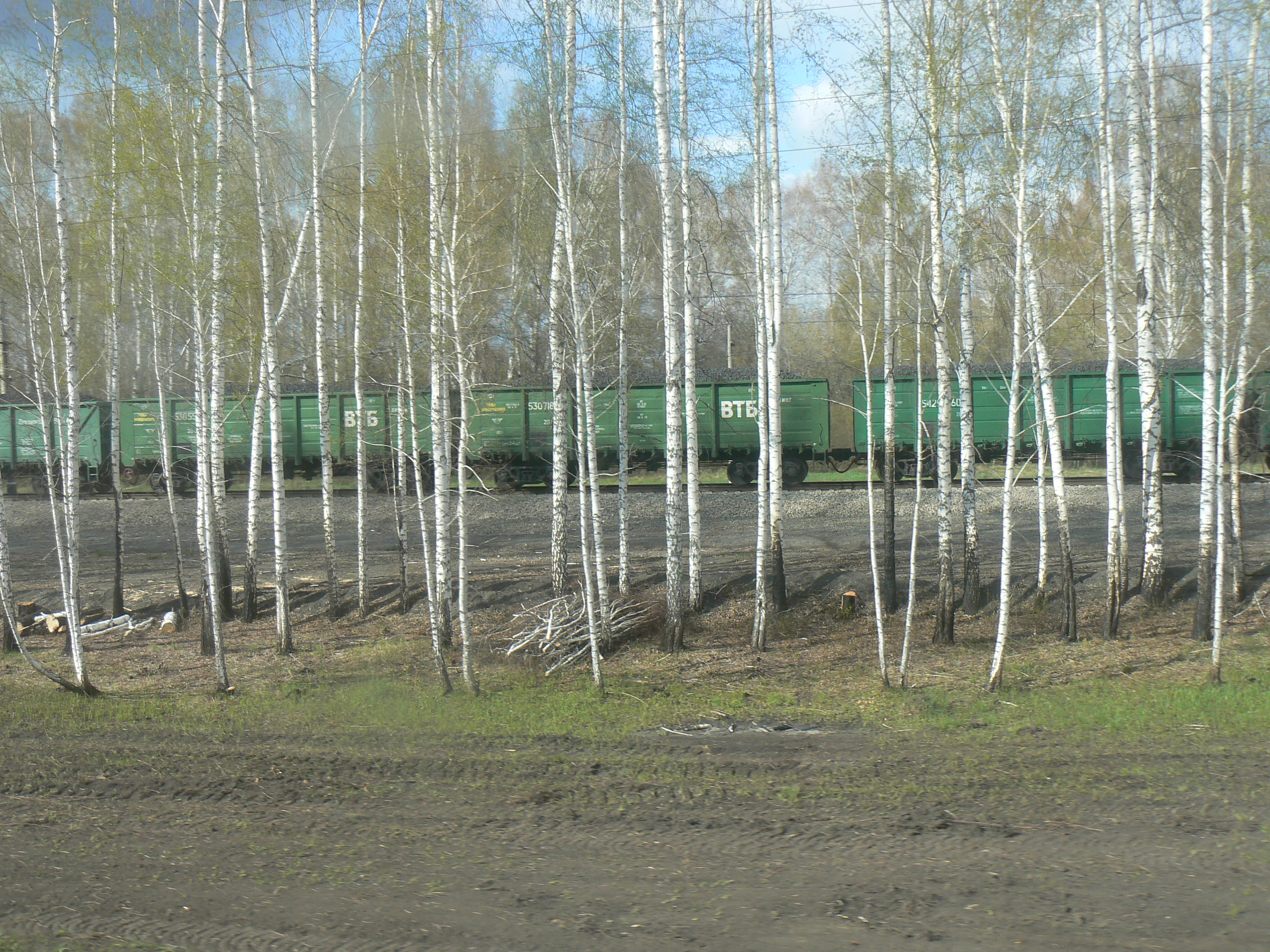
One thing that is noticeable is the amount and size of the freight trains that pass us. I have read that this area of Siberia has the densest freight traffic in the world. It seems to be a continuous flow of oil and gas, coal and timber. At 1700 local time(we’re now 3 hours later than Moscow time), we cross the Ob River and enter Novosibirsk, a modern city with a nice skyline.
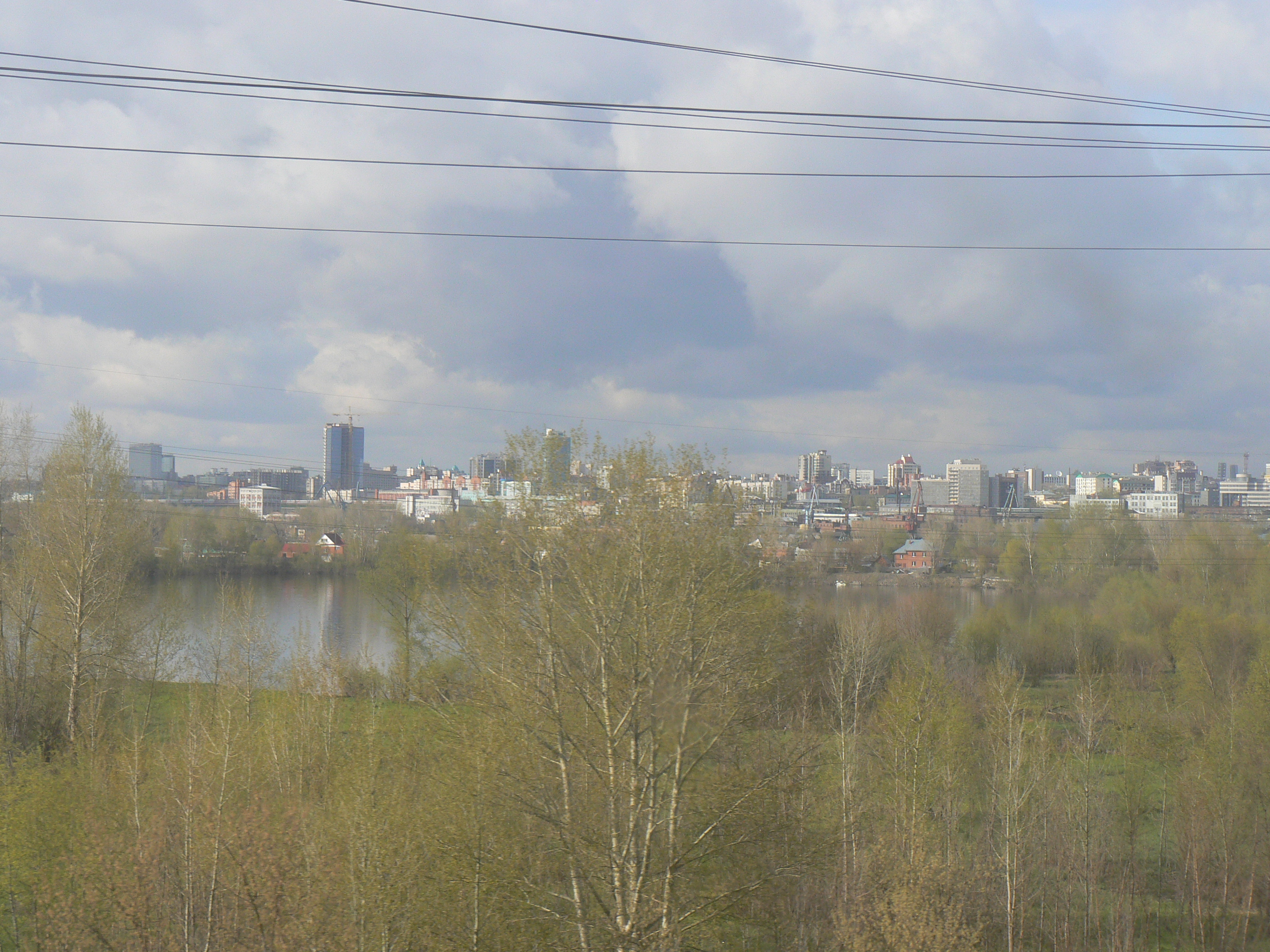
Once again, the Russian Rivers are large and impressive. The Ob is wider than the Mississippi or Missouri but also longer. It starts in the Altai mountains just south of Novosibirsk and empties into the Arctic Ocean, a distance of 3360 miles.
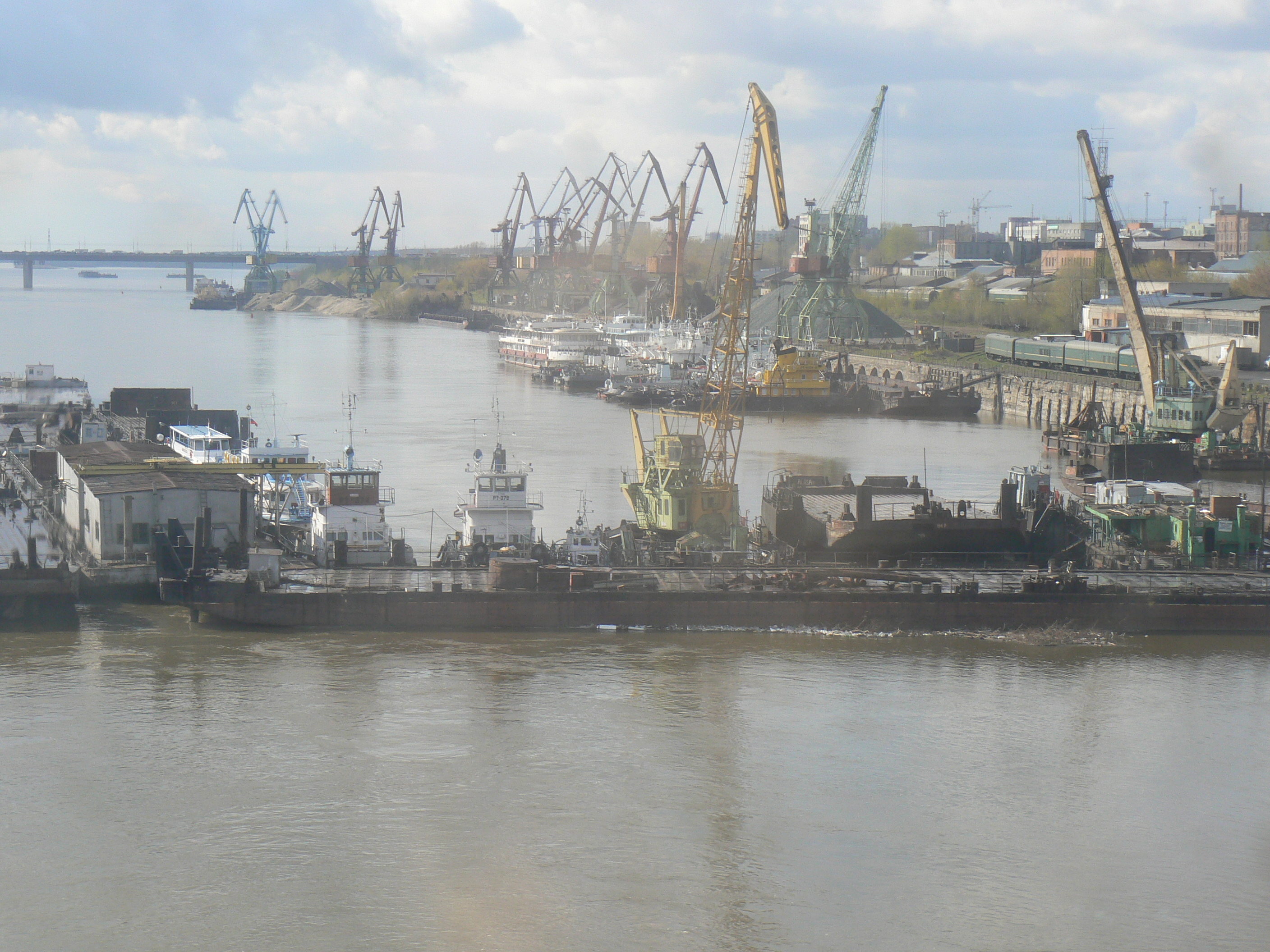
Its primary uses are irrigation and hydroelectric energy, but in Novosibirisk the river is filled with barges moving coal, and the riverbanks are packed with cranes. At 1430, the train arrives at Glavny Station, track number 4, on time. This is the largest and busiest station on the entire Trans‑Siberian Railway. It’s cool and gray outside, about 40 F but the pastel green Vokszal looks bright and inviting. Several other trains are arriving or departing and people are everywhere.
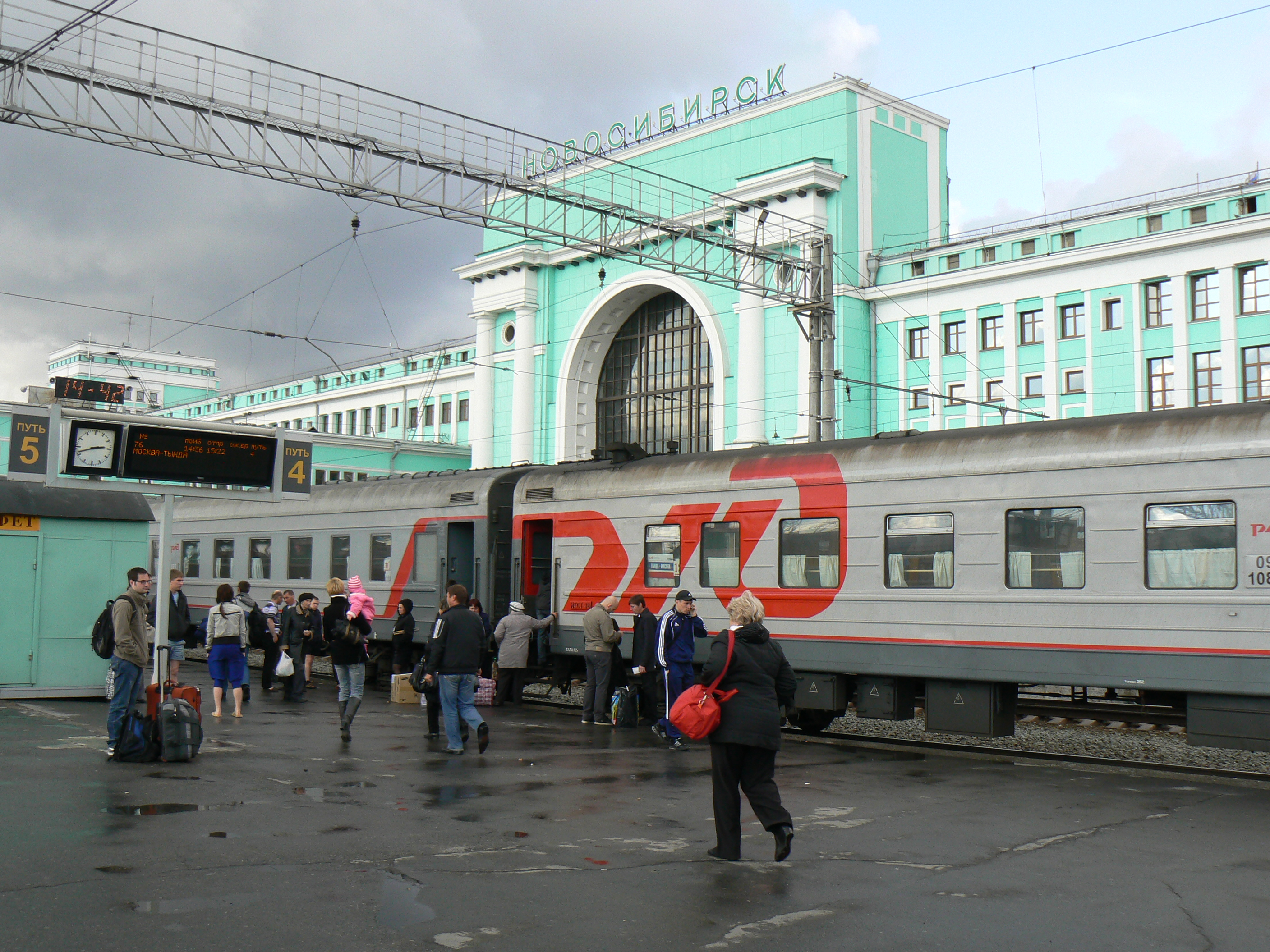
Stepping off the train here marks our arrival in the true heart of Siberia.
Next: Novosibirisk
Prior: Yekaterinburg