Sunday May 15
At 0515 I am woken by sunlight and notice we are slowing down as we enter Jining, China, a large city in Inner Mongolia. We pass thousands of orange, brown brick homes surrounded by walls of the same and covered by red tile roofs. The walls are often covered with large red or brown Chinese calligraphy. Low dry brown colored mountains surround a valley in the distance.
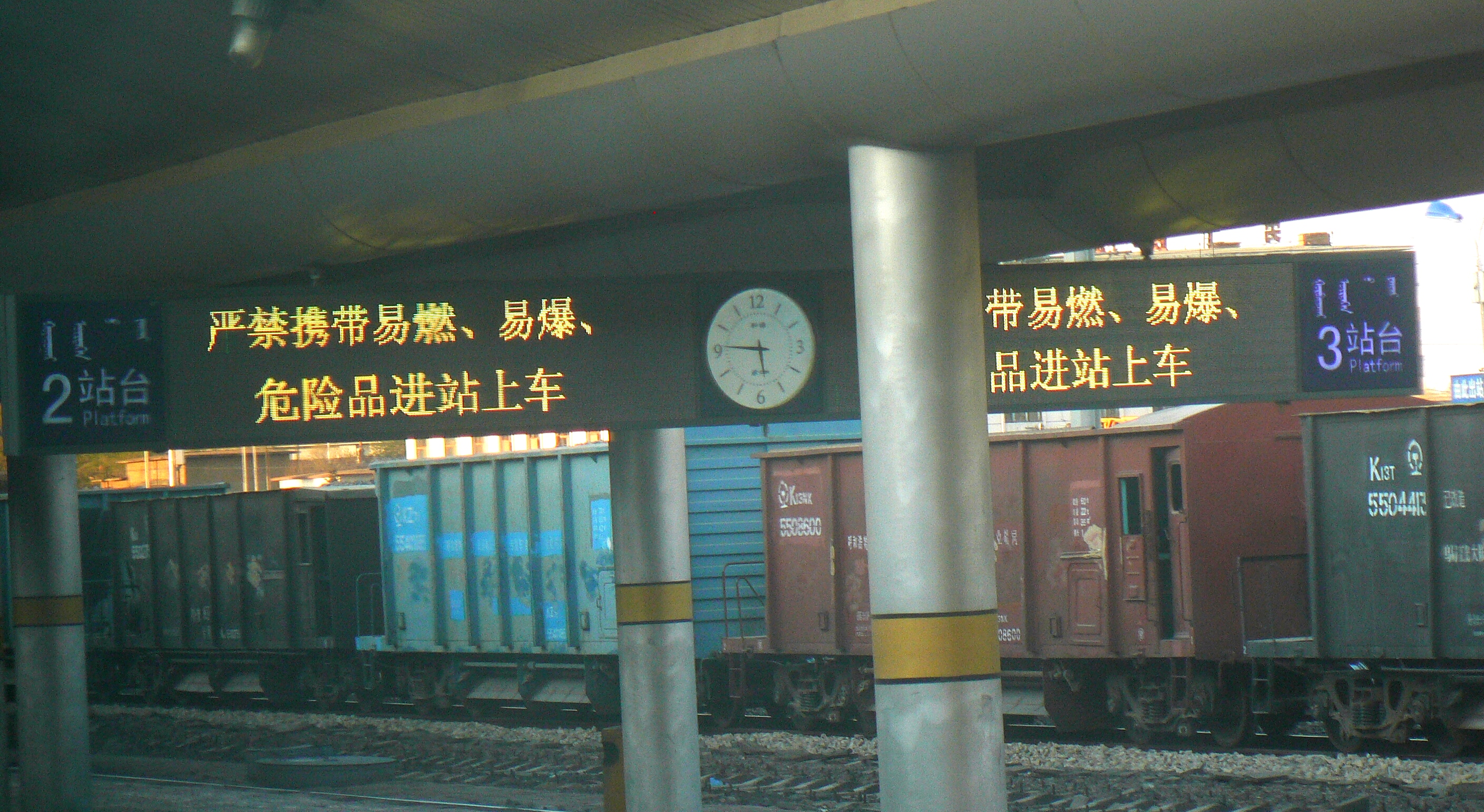
Jining Railway Station
We stop at the station for just a few minutes and are on our way. As we depart Jining we notice much construction and a large expressway with large green traffic signs the same as the Interstate back in America. My map says shows that this is the G55 Expressway.
Morning on the Train: Tea Withdrawal and Gobi Aftermath
I could use a cup a tea as I really became addicted to this as we travelled on the Russian trains. Since much of their tea comes from China, I thought this custom would naturally continue, but even though we are first class on this leg of the trip we are not provided with tea cups. There is a samovar on each car but guess it’s up to you to know to bring your own cup. The other thing that has changed today is that I am really stuffed up bad and my eyes itch like crazy, probably a result of the Gobi dust storm in our car yesterday. Our compartment was also unusually cool last night but it maybe that I just got used to the Russian cars which were always overly warm.
This morning our Chinese conductors open up the windows in the aisles of our train, possibly to air it out after the Gobi dust invasion. This is really enjoyable for sightseeing, and they allow us to have open windows all the way to Beijing. Outside of Jining we are treated to an excellent tour of the Chinese countryside. The train allows you to sit up much higher than you would in an automobile and we have an excellent view of the countryside.
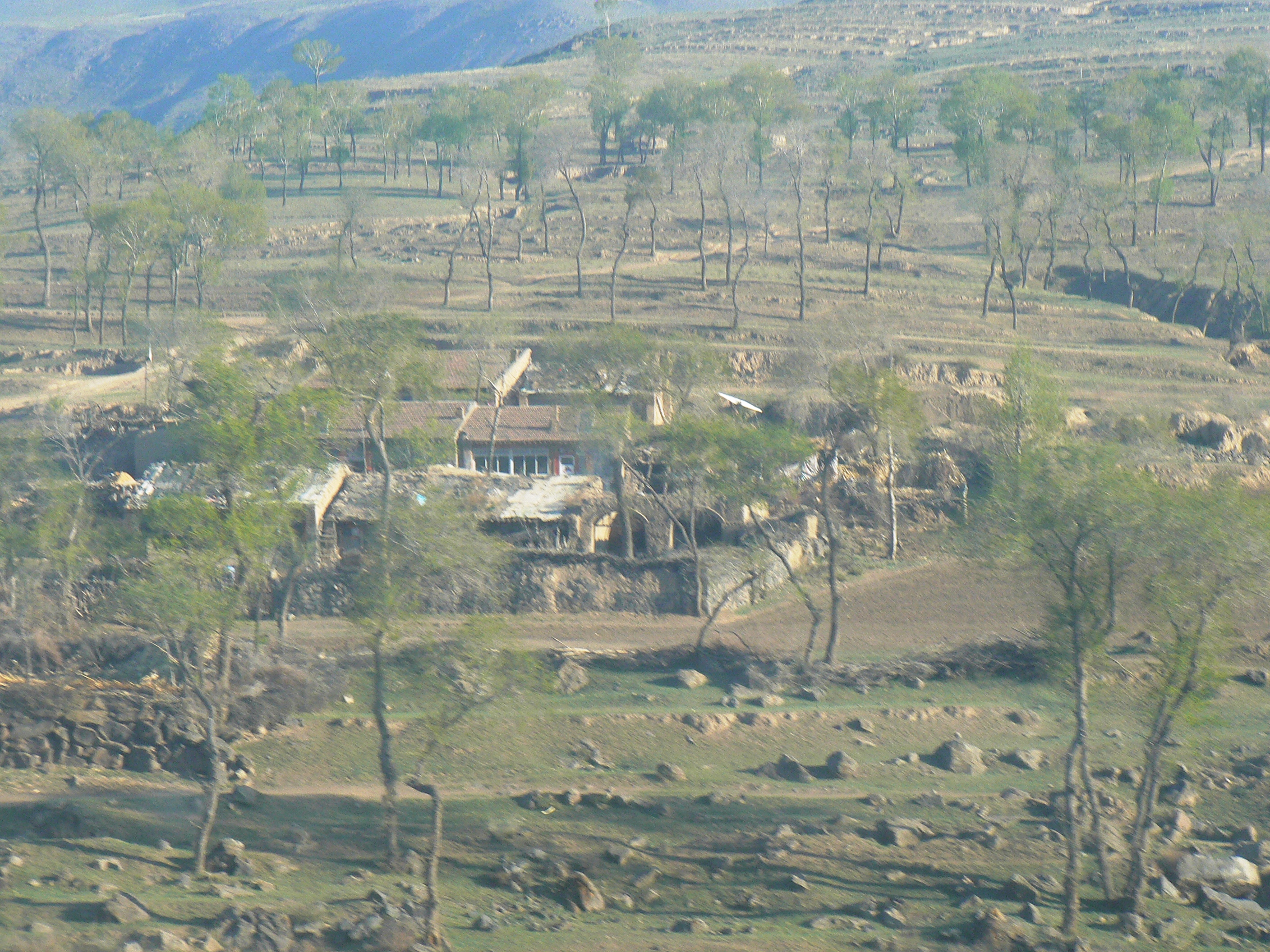
Countryside near Jining
Rural China: Farms, Oxen, and the First Great Wall Sighting
Small farms are common in this part of China and much of the land is worked the old-fashioned way. 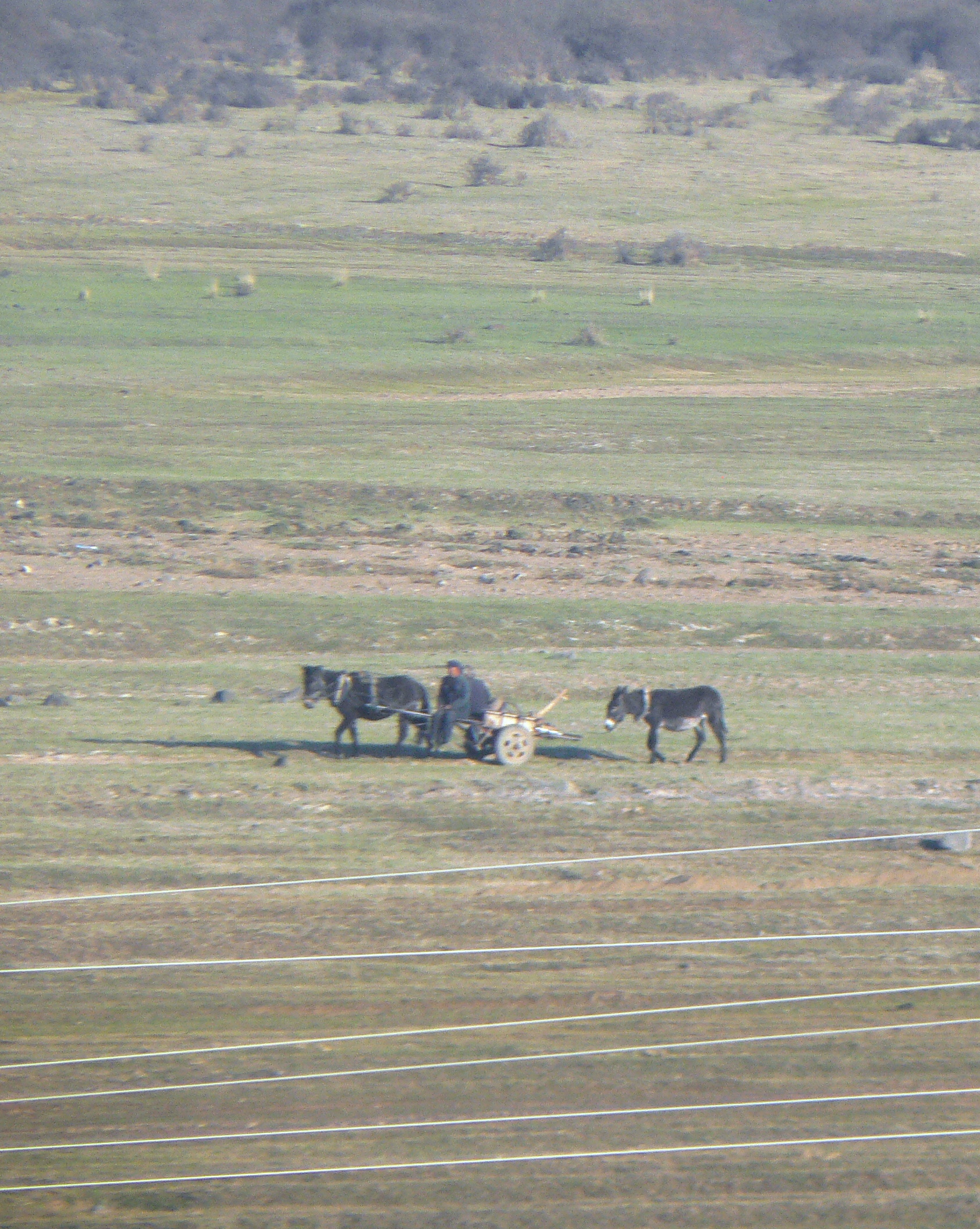 We see most farmers plowing or cultivating behind oxen or mules and rarely behind a tractor. In this part of China, they grow wheat, maize, millet, legumes, and potatoes. Small villages are common every few miles and although the countryside is dry it appears to be fertile and completely in use for agriculture.
Our Trans-Siberian guidebook says we will pass an old, ruined section of the Great Wall soon and we do in fact see this at 0730 near the village of Fenezhen. Actually the train cuts right through the wall. The wall here is not impressive and it is barely visible; it looks more like an old dike that is no longer used. We’ll see more of the Great Wall in a few hours.
Jeff is up now so we walk next door to the dining car to beat the breakfast rush. Unlike the ornate Mongolian restaurant car, the Chinese one is very basic, more like a small military kitchen and snack bar. Breakfast is good but minimal and consists of 2 hard boiled eggs, 2 bread slices, butter, jam and ½ cup of tea, no refills or maybe they just got too busy. We don’t stay long as there is a line of people waiting to eat.
Bathroom Diplomacy Gone Wrong
Back in our compartment, we finally meet our neighbors — a Northern European couple with perfect English and a frosty demeanor. The woman asks sharply why we locked them out of the shared bathroom.
Jeff turns red, apologizes repeatedly, and unlocks the door. It’s unfortunate as we could have bonded with our neighbors over our shared German ancestry, but instead the icy silence lasts all the way to Beijing.
Later, when their shower occupies the shared bathroom, I try the public one down the hall. A man exits, and I walk into a scene that would horrify my wife: bright yellow urine all over the seat and floor. So much for convincing her that train bathrooms are fine.
I retreat to the dining car, where they kindly give me a glass so I can use the samovar. Things improve from there.
Datong: Coal, High‑Rises, and a city of 3 million
At 0800 the train enters the city of Datong China, in Shanxi province. We have a brief stop at the Railway station and see lots of interesting people, some of them in the train on the next track.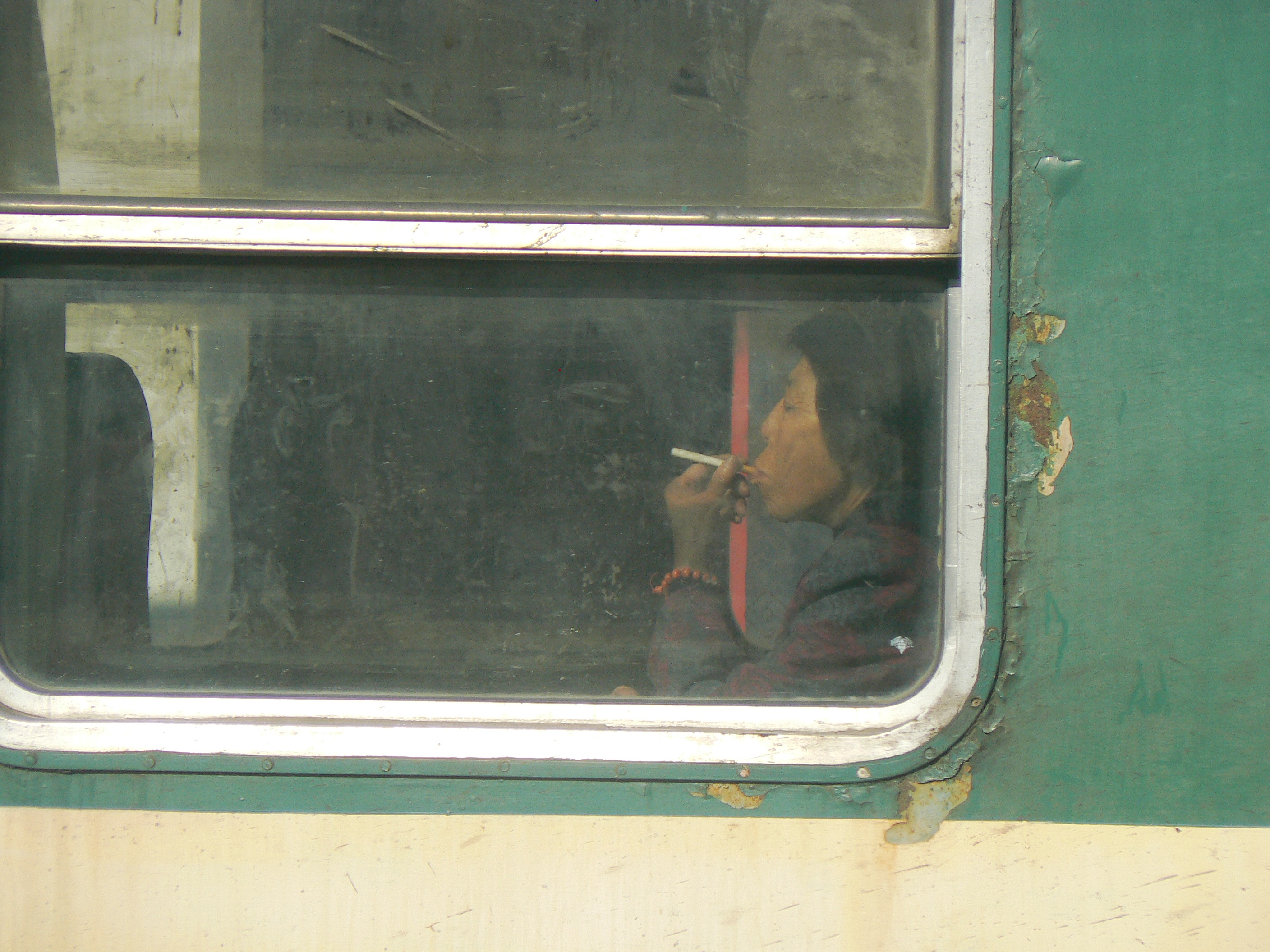
Datong is a huge city of 3.1 million and is known for coal mining. We pass several power plants with huge cooling towers that look Nuclear but they are in fact all coal fired. I have never seen so much residential construction in one place. At one point the train is dwarfed as it passes 8 new and identical high rises, each 40 stories high. Nearby is a new 8 lane tree lined boulevard packed with commuters.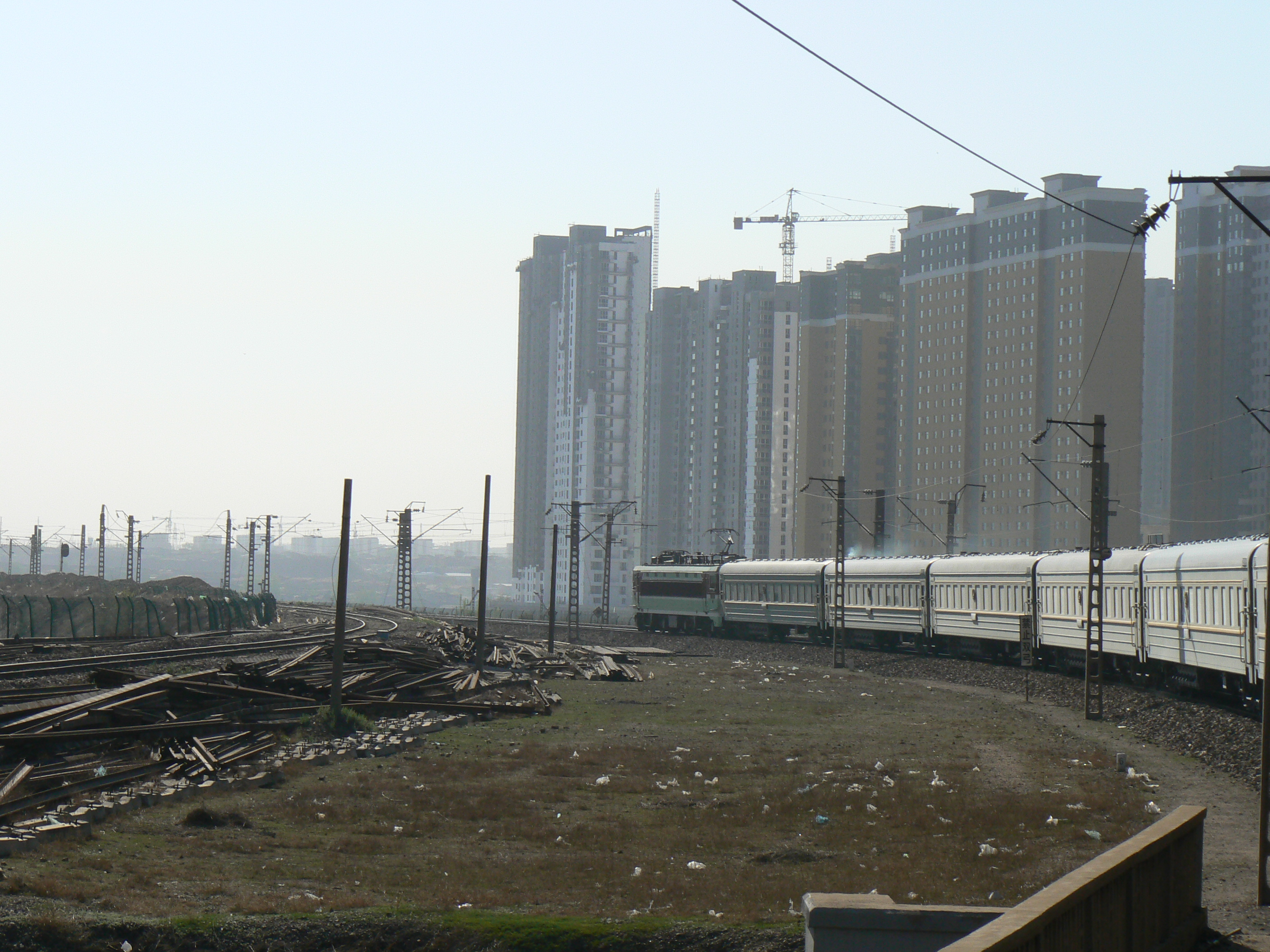
We are soon into the countryside now flanked by the YanShan mountain range. To our south, rice terraces probably hundreds of years old climb the sides of the rolling hills. The Great Wall becomes visible for a second time and this time it is intact and winds for several miles across the terrain lines. 
Hebei Province and Zhangjiakou
Around 0930 we enter Hebei province which is very mountainous but still there are several small farms, rice terraces, orchards and grape farms. Scooters are everywhere and more common than cars in the countryside.

Heibei Province
As we enter the city of Zhangjiakou, a modern suburban community can be seen with homes that are similar to an urban area back in the US, but this gives way to more traditional Chinese homes in the hutong style. 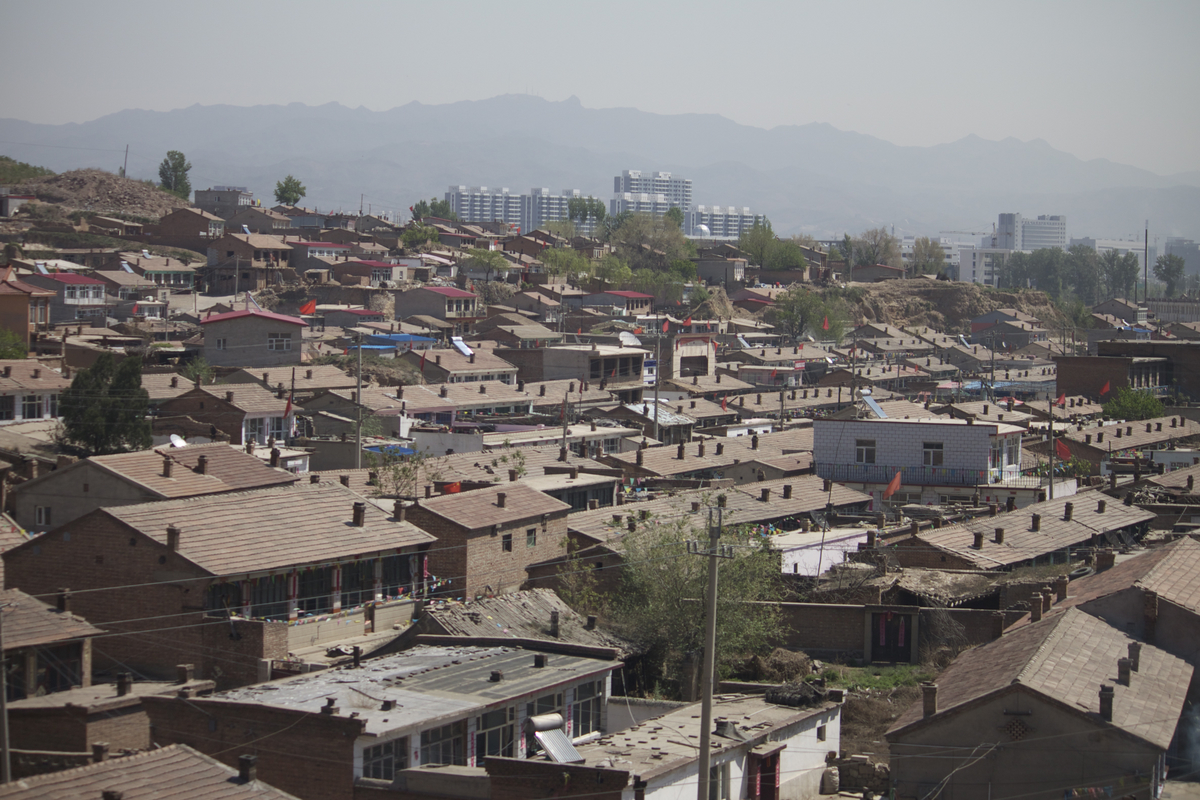 Zhangjiakou, a city over 1 million about 250Km from Beijing, is on the historic Tea Road and once was considered the ‘Northern Gate’ of the Great Wall. The railway station is especially busy with freight trains transporting coal, as we are still in a mining region.
The ??????? Entrance
We get out to stretch and look around. The station is well marked in Chinese and English.
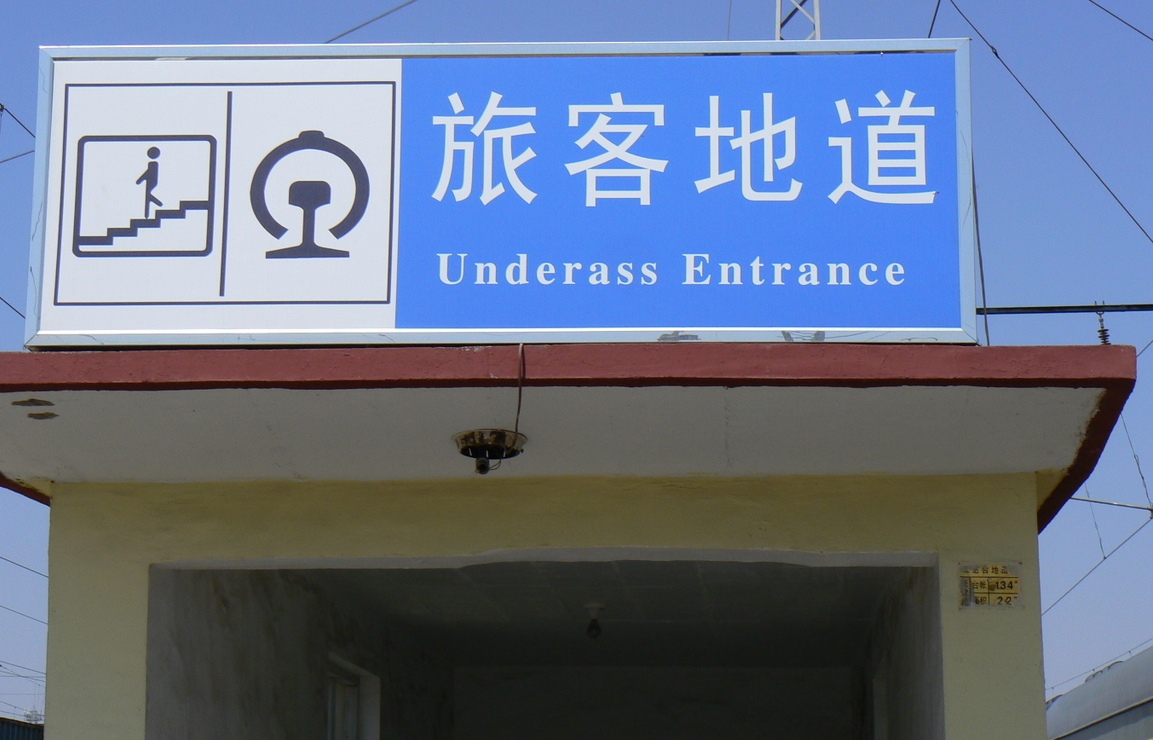
Forgot to run the Spell Checker
As we get ready to pass underneath one of the tracks on our way to the terminal, Jeff pokes me and points to a large blue sign over the tunnel. “Underass Entrance” it says in large 12-inch letters. Ooops!
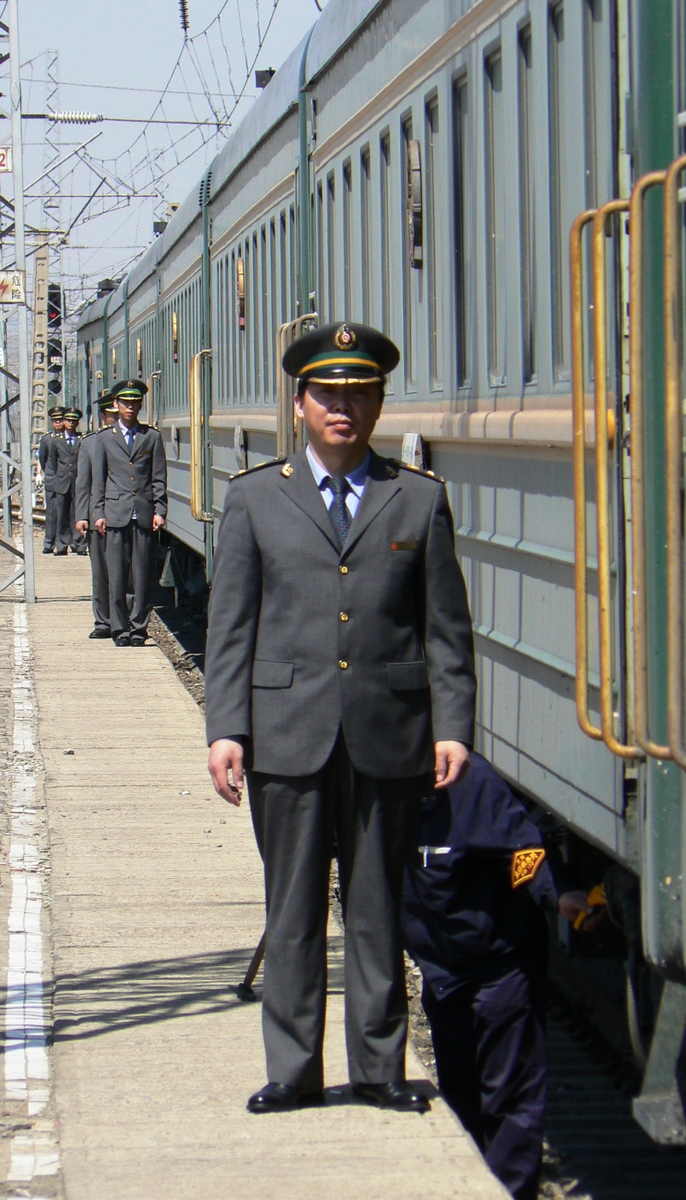
Our Attendant at Zhangjiakou Railway Station
South Toward Beijing
Back on board the train we continue to journey south to Beijing again passing more large power plants as we leave Zhangjiakou. The train seems to pass by one of every 50 miles or so. At 1100 we walk back to the dining car hoping for a big Chinese buffet. Not so, but we are served tea, rice, meatballs and lettuce which are tasty. While we are eating, we pass an old walled fortress near the city of Xuanhua. Later I find that it is an ancient city called Jimingyi Dak.
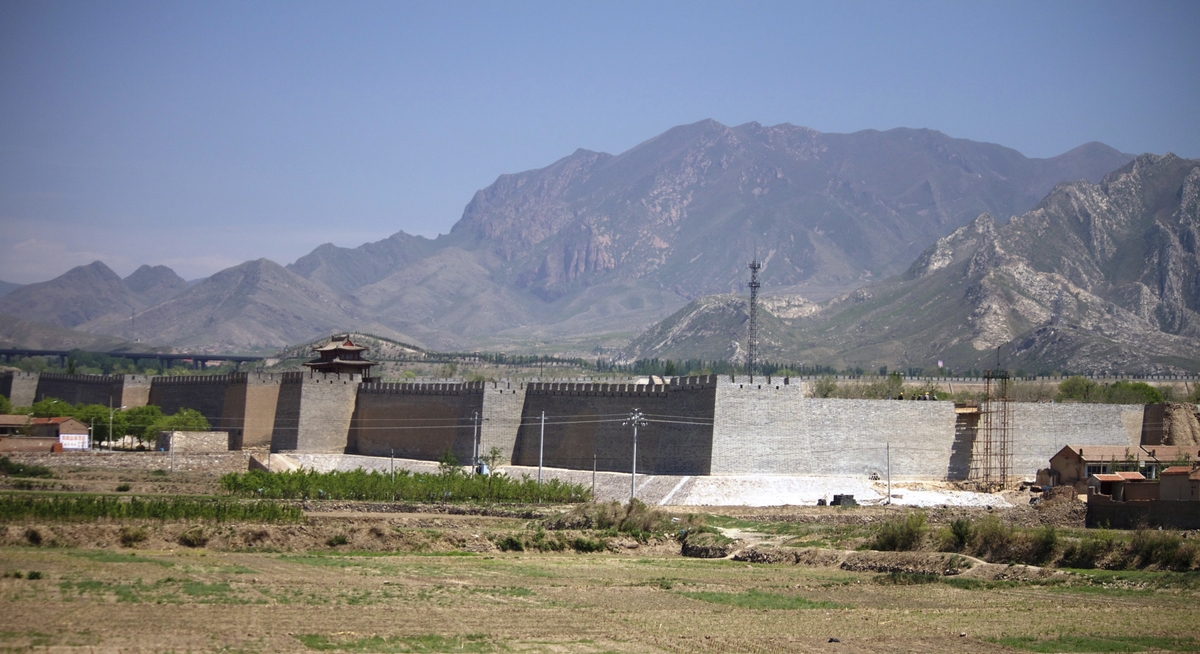
Jimingyi Dak
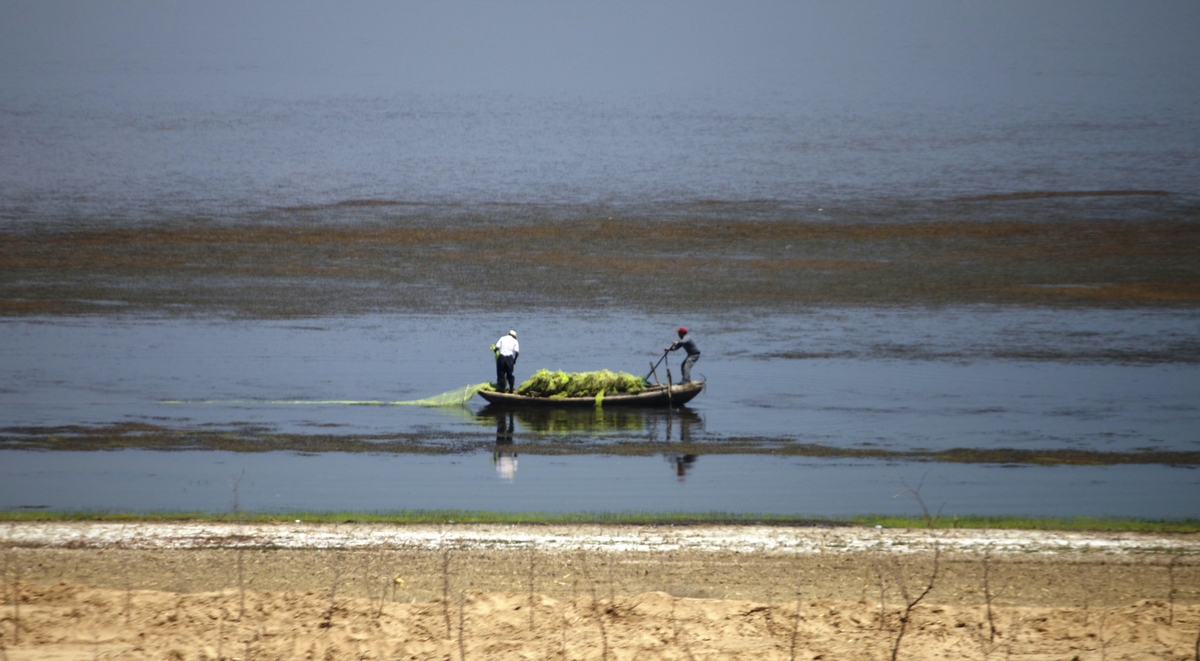
The scenic vista continues as we pass through Huailai, then wind farms and the sprawling Guanting Reservoir. 
 Just Northwest of Beijing the train leaves the valley and starts to pass through dozens of long tunnels as it follows the Yong-Ting River through the YanShan Mountain Range.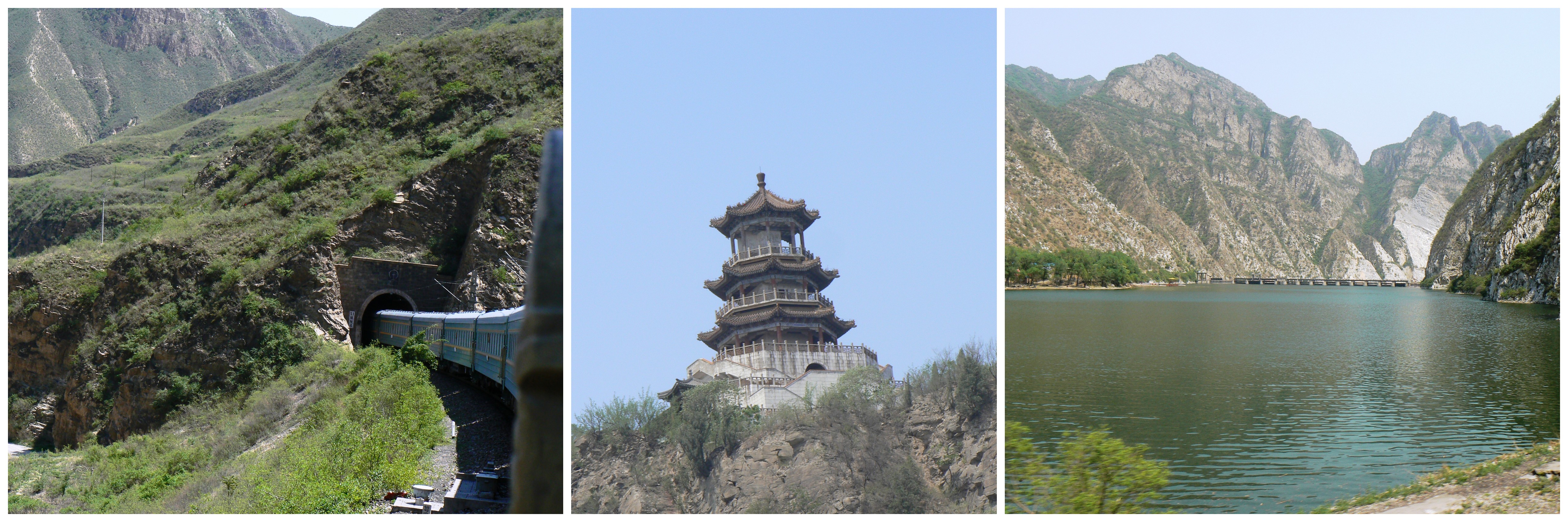
Arrival in Beijing
Everyone in our car leaves their cabin and watches the scenery through the open windows in the aisles as we descend now, pass through the city of Mentougou and enter the northwest part of Beijing. The train slows to about 20 mph and we continue for another hour passing through the Feng Tai district on the West side and then we stop briefly at the new, ultramodern Beijing South Railway station.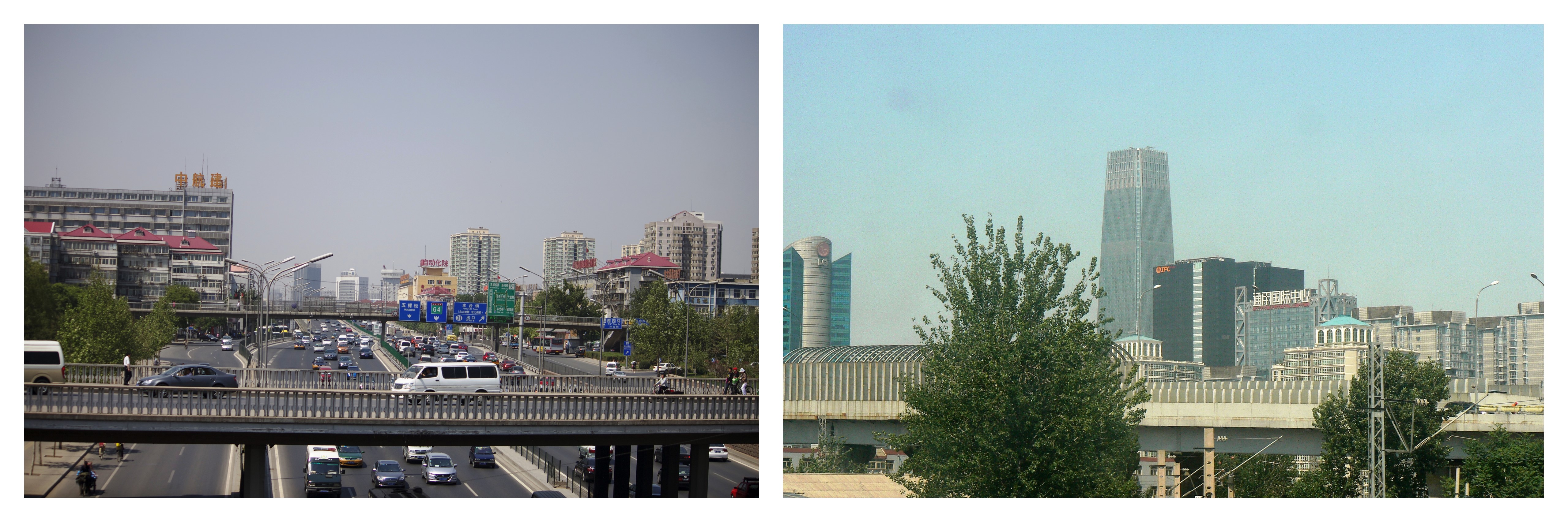
Soon after we leave the station, we start to cross 8 lane freeways and boulevards one after another and then the China World Trade Center in downtown Beijing comes into view.
While in awe of Beijing’s modern skyline, and just before arriving at the central Beijing Railway Station, we pass a portion of the old city wall and the East Gate of old Beijing. Beijing was a walled city until Mao had it almost completely removed in 1950’s. Wow, you can almost feel the history!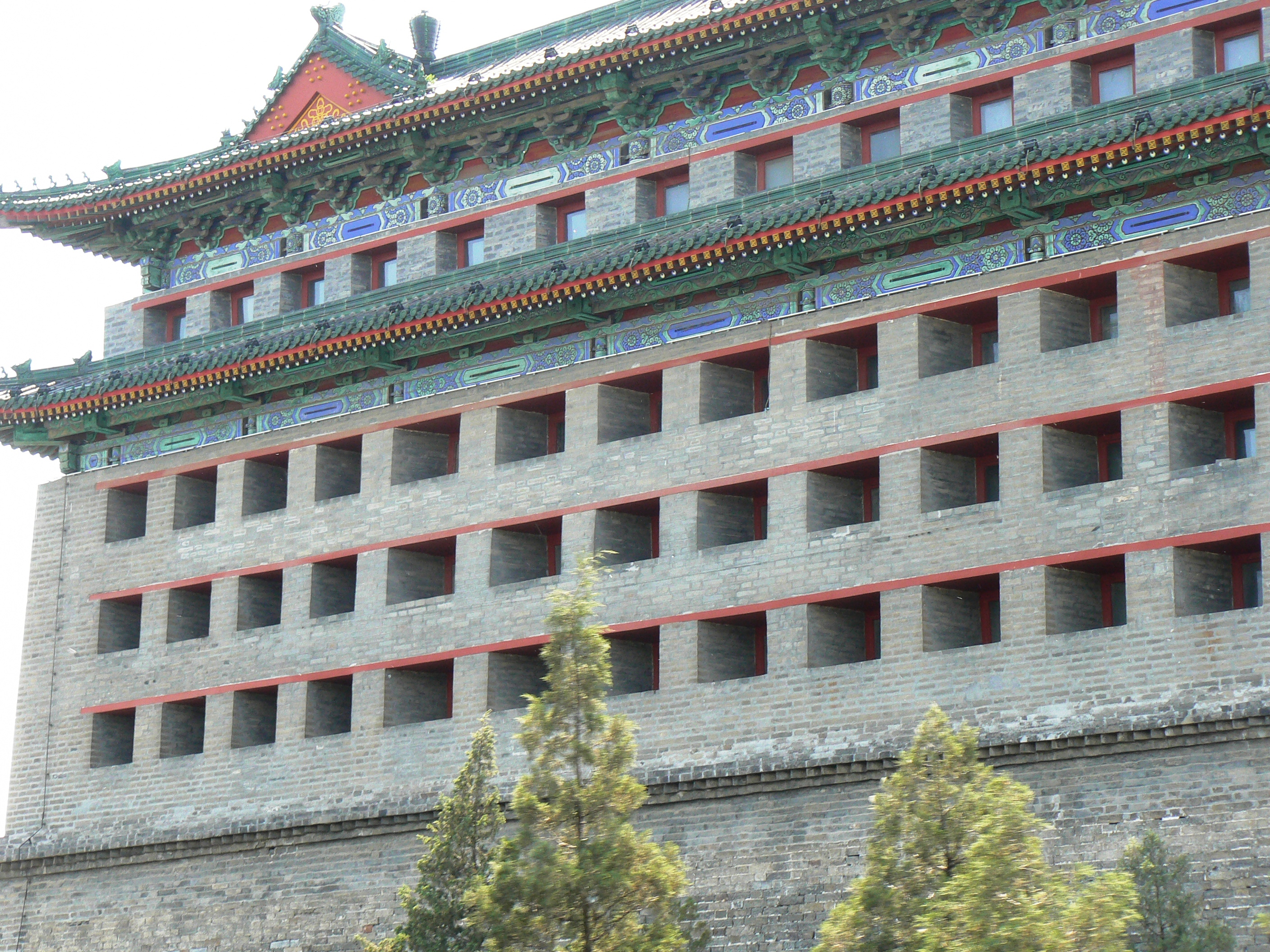
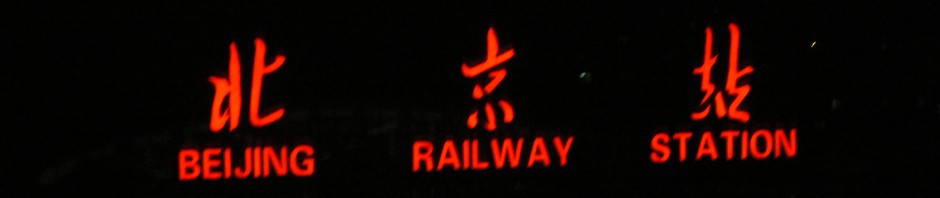
A few minutes later the train arrives in the Beijing Main Railway Station, 7622 kilometers, 4736 miles from Moscow.
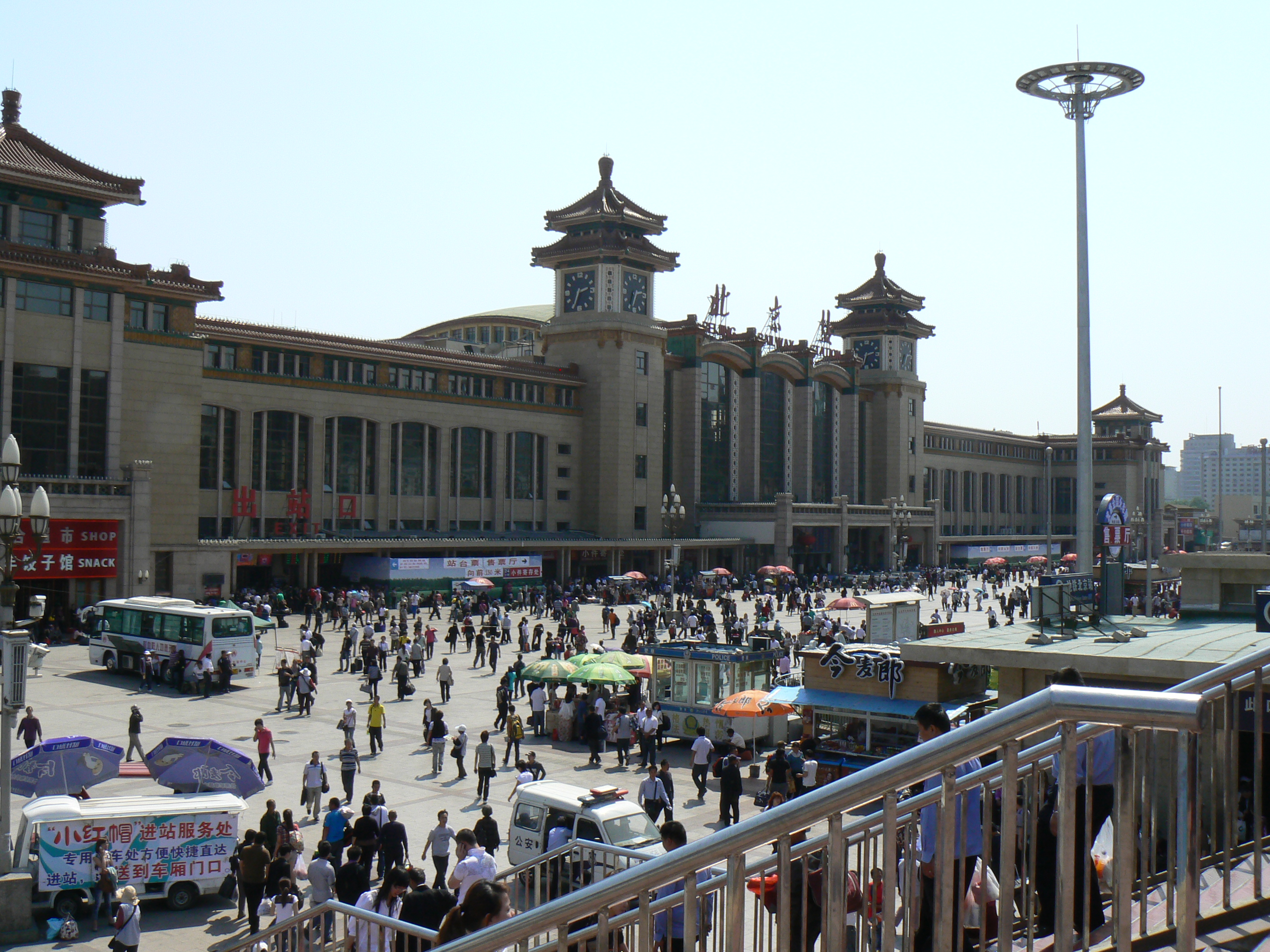
Beijing Central Railway Station
Next: Beijing